

How Long Do Tiny Homes Last?
Construction, installation and care make the difference over time.
Schedule Free ConsultationThe short answer
A well-built tiny home can remain usable for decades, depending on its construction, installation, climate and maintenance. Our manufacturer confirms that homes it built in 1991 are still in use, roughly 35 years later as of 2026. That is a concrete example of longevity, rather than a guaranteed lifespan for every home.
A tiny home's useful life is about more than its size. The quality of the structure, protection from moisture, a suitable site and regular care all matter. When comparing park model tiny homes, look for evidence of long-term use and clear information about construction and maintenance.
Homes built in 1991 are still in use
Our manufacturer began building tiny homes in 1991. Snake River Tiny Homes has confirmed directly with the manufacturer that homes built that year are still being used today. As of 2026, that represents roughly 35 years of use.
This history provides a real example of what durable construction and continued care can make possible. It does not mean every home from that period remains in service, or that the homes still in use have required no repairs, updates or replacement components. We are reporting the manufacturer's confirmation, rather than an independently inspected condition assessment.
Why sturdy construction matters
A home begins its life with the materials, workmanship and design chosen by its builder. Ask how the frame, roof, walls, floors, windows and exterior finishes are constructed and how the home is specified for its intended location.
Compare documented construction details and inspection records. Our park model lineup includes NOAH+ certification, which provides inspection documentation against identified standards. Certification supports informed comparison; it does not establish a fixed lifespan or replace maintenance.
Installation and climate affect long-term performance
Even a carefully built home needs a suitable site and proper installation. Follow the manufacturer's requirements for support, anchoring, drainage and utility connections, using qualified local professionals for the work involved.
Discuss snow, wind, temperature and moisture conditions before ordering. The home configuration and installation should match the requirements for the actual location. Our delivery and setup guide explains the planning responsibilities, and our team can discuss available weather-related options.
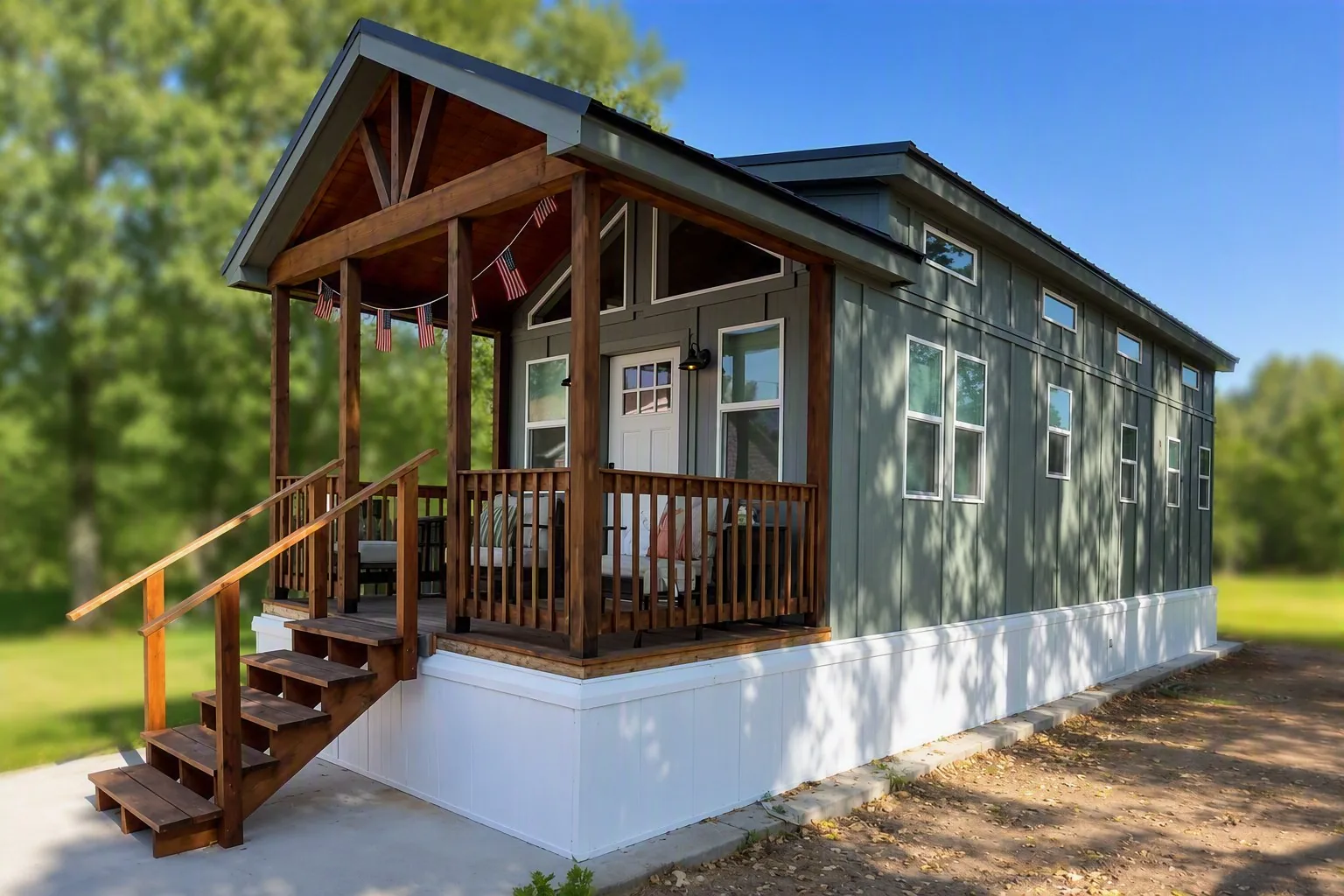
Protect the home from moisture
Water intrusion can affect a home's finishes and structural materials. Follow the manufacturer's maintenance instructions for roofing, siding, windows, doors and seals, and address leaks or damaged materials promptly.
Pay attention to plumbing leaks, condensation, ventilation and drainage around the site. Ask your installer or a qualified service professional about concerns rather than waiting for visible damage to grow. Keep records of inspections, repairs and work performed.
The structure and its components have different lifespans
A home can remain useful while individual components are repaired or replaced. Appliances, heating and cooling equipment, water heaters, sealants and finishes do not necessarily last as long as the structure around them.
Plan for ordinary maintenance and eventual replacements as part of ownership. A 35-year-old home still in use is evidence of continued usefulness, not a promise that every original system remains unchanged. Warranty coverage is also separate from expected service life; review the written warranty for its actual terms.
What does 25-year financing tell you?
Our financing company routinely offers qualified buyers 25-year loans for our park model tiny homes. That is useful context for buyers considering a long-term purchase and comparing payment options.
The loan term is a financing feature, not a guarantee of the home's lifespan or resale value. Lending decisions involve the borrower, collateral and other underwriting requirements; we do not claim to know the lender's durability assumptions. The manufacturer's confirmation of homes still in use since 1991 is the more direct evidence of longevity.
Review available financing options with the lender, including eligibility, rates, down payment, total borrowing cost and the term offered for your situation.
Questions to ask before buying
- How long has the manufacturer built this type of home, and are older examples still in use?
- What construction standards, inspection records and location-specific specifications are documented?
- What support, anchoring, drainage and installation does the manufacturer require?
- What maintenance schedule applies to the roof, exterior, seals and home systems?
- What does the written warranty cover, and who handles service?
- What should I budget for maintenance, repairs and eventual equipment replacement?
Choose a home for the years ahead
Consider both the physical home and how well its layout will serve your future needs. A sturdy home still needs a comfortable sleeping arrangement, usable storage and access that fits its occupants. Long service life is most useful when the home continues to fit your daily routine.
Snake River Tiny Homes is a family-owned company in Rigby, Idaho, coordinating delivery throughout the continental United States. We can help you compare models, available selections and documented specifications from wherever you are. Use Build and Price to explore your choices and request a personalized estimate.
Frequently asked questions
Can a tiny home last 30 years or longer?
Do tiny homes need maintenance?
Does a 25-year loan guarantee a tiny home will last 25 years?
Does certification establish a home's lifespan?
Shop from Anywhere.Buy with Confidence.
Compare construction details, layouts and available options with our family-owned team. Get the information you need to choose a home for the years ahead.