

How Are Tiny Homes Delivered Nationwide?
Placement · Published
Written by Porter T. Talbot, MSFS · Co-founder and President

Co-founder and President, Snake River Tiny Homes
The short answer
Park model tiny homes travel with professional transporters using equipment and routes appropriate for the home’s dimensions and weight. Snake River Tiny Homes coordinates delivery through independent transporters throughout the continental United States. Transportation, unloading and final placement are different tasks, so confirm the delivery scope and arrange required local installation services before arrival.
Stock illustration of home delivery; not a depiction of the actual transport equipment.
How Transporters Move Park Model Tiny Homes
Moving a park model home requires planning beyond choosing a truck and a departure date.
The transporter evaluates the load, equipment, route and applicable permits. Depending on the route and load, escort vehicles or restricted travel periods may apply.
Ask how your particular home will be transported and what the quote includes. Do not assume another buyer’s delivery arrangements will match yours.
Which Roads Can Accommodate Delivery?
A route suitable for a car may not work for an oversized load.
The transporter must consider overhead clearance, bridge limits, road width, turns and restrictions along the journey. The final approach can require as much attention as the highway portion.
Share the exact destination early and ask the carrier to review the proposed access route.
What Must Be Ready at Your Property?
Provide current photographs and useful measurements of entrances, gates, turns, slopes and overhead obstacles.
Discuss ground conditions, culverts and the space available for the transport equipment to maneuver. Arrange any needed access improvements before arrival.
Let the transporter identify the clearances and access conditions required for its equipment. A universal driveway measurement would not account for every home and delivery arrangement.
How Are Delivery Dates Scheduled?
Delivery depends on the home’s readiness, carrier availability, route permissions and destination preparation.
Confirm an expected window and ask how changes will be communicated. Coordinate local contractors around the carrier’s confirmed arrangements rather than an early planning date.
Can Weather Delay Delivery?
Wind, snow, ice, flooding and poor ground conditions can affect transportation or access.
A delay may be necessary even when the destination’s weather looks acceptable because conditions elsewhere on the route can interfere. Ask how a postponed delivery affects storage, contractor scheduling and any additional charges under your agreements.
Common Challenges to Address Early
Narrow entrances, sharp turns, soft ground, overhead lines and unfinished site work can complicate delivery.
Another common misunderstanding concerns placement. Reaching an accessible delivery point does not automatically include moving the home into its final position, leveling it or connecting utilities.
Questions to Ask Before Delivery
Where does the carrier’s responsibility end? Who provides unloading or transfer equipment? Who arranges final placement and installation? What insurance and damage-reporting procedures apply? What happens if the site is not ready? How will schedule changes and additional costs be handled?
Our Delivery and Setup guide explains the division of responsibilities. Buyers arrange placement, leveling, installation and utility connections separately.
From Factory to Prepared Site
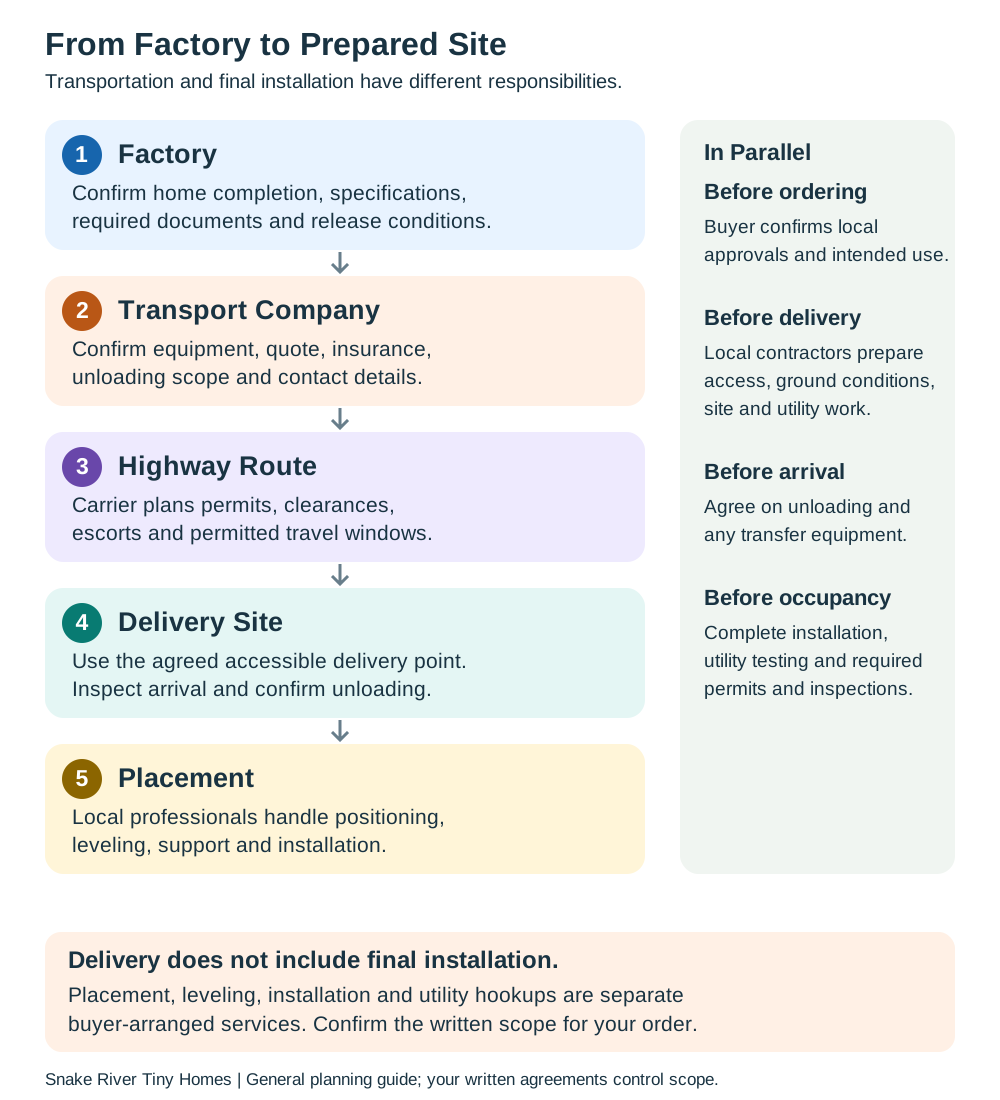
Factory: Complete the home and confirm specifications, documents and release conditions. Transport company: Agree on equipment, quote, coverage, contacts and unloading scope. Highway route: Confirm applicable permits, clearances, escorts and schedule updates.
Delivery site: Check site readiness, inspect arrival and follow agreed unloading arrangements. Placement: Local professionals position and install the home under separate contracts for leveling, support, anchoring and utility work.
Confirm local approvals before purchasing and preparing the property. Review the fully equipped pricing guide when budgeting for transportation and site costs.
Shop from Anywhere.Buy with Confidence.
Talk with our family-owned team about your model, selections, destination and next steps.